EV NEWS EV News
India’s EV Battery Supply Chain: Why Lohum Is Looking for Nickel Mines Overseas
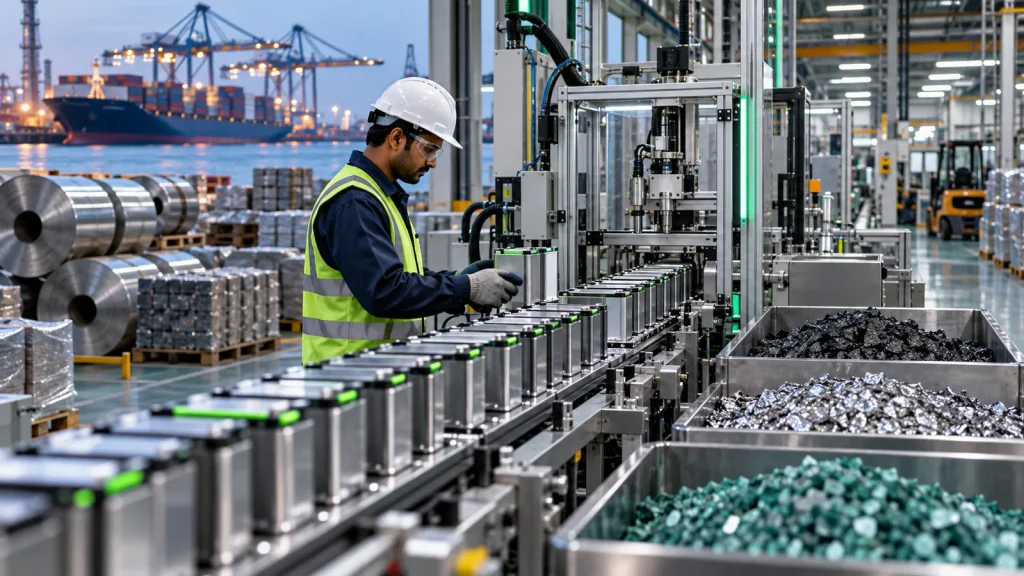
India’s electric vehicle conversation often starts at the showroom: battery size, driving range, charging time and price. This week, the story moved further upstream. Indian critical-minerals company Lohum is seeking to buy nickel mines in Indonesia and the Philippines as it plans to expand battery-material production, according to a Reuters report published on 22 September 2026. That is a supply-chain plan, not a new electric car or a signed mine purchase. It matters because an EV’s price and availability depend partly on materials and processing capacity that buyers rarely see.
What has Lohum actually announced?
Reuters reported comments from Lohum founder and chief executive Rajat Verma. The company currently produces around 1,000 metric tonnes of nickel a year from recycled materials at a plant in Gujarat and aims for 10,000 metric tonnes a year over approximately 18 months. It is looking at mine acquisitions in Indonesia and the Philippines, and is seeking funding for broader plans. The report also describes work on lithium, cathode materials and recycling.
These are targets and proposed investments. The Reuters report does not say Lohum has completed the nickel-mine purchases or that an Indian EV buyer will pay less for a car next month. A sensible headline says the company seeks mines or plans capacity; it does not say production has already multiplied tenfold.
Why does nickel matter to electric cars?
An electric vehicle battery is not one uniform chemistry. Some lithium-ion cathodes use nickel, while lithium iron phosphate (LFP) batteries do not use nickel in their cathode. Nickel can help enable particular energy-density and performance choices, but it is only one part of a pack’s design. The choice of chemistry depends on engineering, cost, safety, availability and the intended vehicle.
That is why a change in nickel supply does not have the same effect on every electric car. For example, the MG Hector Tomahawk EV page can be assessed on its own published battery chemistry when its vehicle record is complete; a buyer should not assume that news about nickel affects that model’s current sticker price. The same caution applies across brands. If chemistry is important to you, ask the manufacturer for the battery specification of the exact variant.
For India, the broader issue is whether companies can secure raw material, refine it to battery-grade quality, make components and recycle used packs at commercial scale. Owning or contracting a mine is one possible link. It does not replace refining, cell production, pack assembly or quality control.
The supply chain has several different jobs
Think of the battery journey in stages. Minerals are mined or recovered from used products. They are refined into usable materials. Battery makers then turn those materials into components and cells; automakers or suppliers assemble and validate the finished pack. Later, repair, reuse and recycling can return some materials to the system. Delays or price changes at any stage can affect manufacturers, although they do not translate mechanically into a retail car-price change.
Reuters says Lohum is also pursuing lithium production linked to mining rights in Zimbabwe and plans a cathode-active-material plant in Uttar Pradesh. The report describes a lithium-ion battery-recycling project in Sharjah. These different moves are connected by the ambition to participate in more of the materials chain. They should still be read as plans at different stages, each with its own financing, permits, processing and execution challenges.
The recycling part is particularly relevant to India. Existing batteries, manufacturing scrap and eventually end-of-life EV packs may contain recoverable materials. Recycling cannot instantly replace mining: the volume of old EV batteries available today is limited by the age and size of the vehicle fleet. But it can become a useful domestic source over time if collection, traceability and recovery economics work. For a buyer, the immediate practical issue remains the warranty and service process for the battery in the car they are considering.
Does this mean EV prices will fall?
No immediate price conclusion follows from the announcement. A vehicle price reflects far more than one mineral: pack design, cell sourcing, manufacturing scale, import exposure, taxes, logistics, software, safety engineering, finance and an automaker’s pricing strategy all matter. A mining acquisition that has not yet closed cannot be treated as guaranteed local battery supply. Even an operating mine needs processing capacity and stable commercial contracts before its output reaches a vehicle.
For a shopper deciding whether to buy now or wait, the most useful comparison remains the one in front of them. Check the current on-road quote, battery and vehicle warranty, home-charging feasibility, realistic weekly distance and service coverage. Use the NUOVOS EV Finder to narrow models, then compare the verified vehicle specifications in Compare EVs. A supply-chain announcement is valuable context, but it should not override a family’s actual driving requirements.
What should NUOVOS watch next?
There are four follow-up questions worth tracking. First, does Lohum announce a completed transaction, and at what scale? Second, does the planned nickel capacity enter production on the stated timetable? Third, do the lithium and cathode-material projects move from proposals into operating facilities? Fourth, are there disclosed supply agreements with cell makers or automakers? These milestones would make the potential impact easier to judge than a headline alone.
India’s EV sector needs dependable supply chains as well as attractive vehicles. Lohum’s reported search for mines illustrates the industry’s interest in controlling more of the materials journey. For buyers today, it is a reason to understand battery chemistry and warranty terms—not a reason to assume cheaper cars are around the corner.
Frequently asked questions
Has Lohum bought the mines? The 22 September Reuters report said the company was seeking to buy mines. It did not announce a completed acquisition.
Do all EV batteries contain nickel? No. Battery chemistry varies; LFP cathodes do not contain nickel.
Will this change Indian EV prices immediately? There is no evidence in the reported plans to support that claim. Mining, refining and car pricing involve separate steps and timelines.
Sources checked: Reuters report, 22 September 2026; for model-specific chemistry, use each automaker’s current published specification.
More EV news
News story
Could Higher Petrol Prices Make an EV Cheaper to Own in India? Work Through the Numbers
September 26, 2026