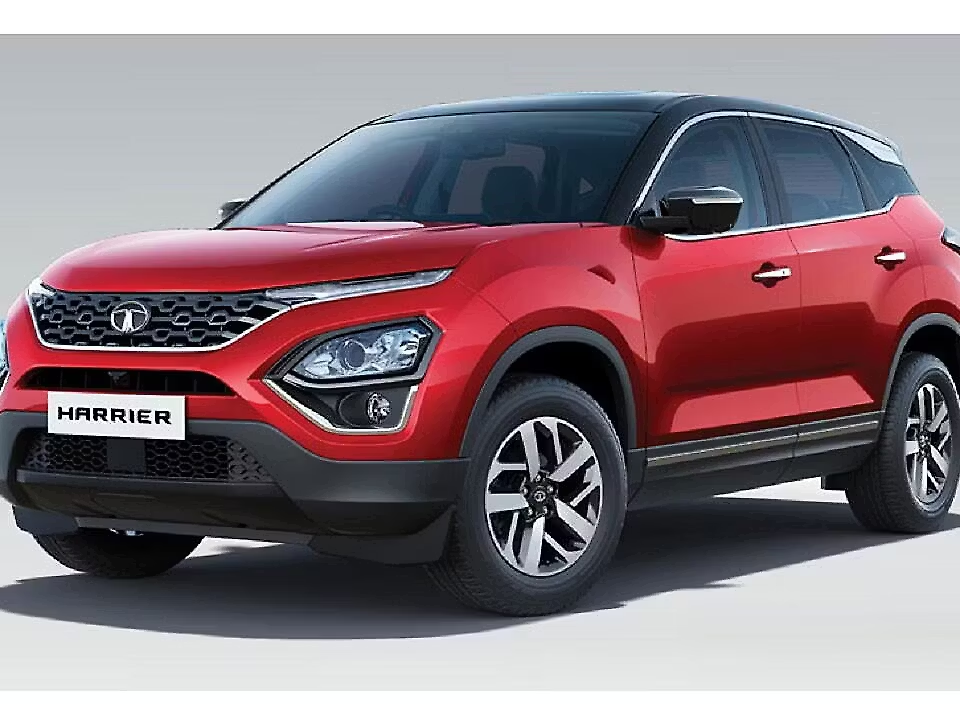
The Tata Harrier has long been a diesel darling in India’s midsize SUV segment, celebrated for its commanding presence, premium cabin, and highway prowess. But with the launch of the Tata Harrier Petrol on December 9, 2025, buyers now have a fresh choice: the refined 1.5L turbo-petrol engine versus the trusty 2.0L diesel. Both powertrains share the Harrier’s bold Omega-Arc design, 5-star GNCAP safety, and feature-packed interior, but they cater to different needs—city slickers vs long-haul heroes.
Priced from ₹13 lakh (ex-showroom) for petrol and ₹14 lakh for diesel, the Harrier lineup undercuts rivals like the Mahindra XUV700 and MG Hector. Wondering about Tata Harrier price, Tata Harrier mileage, or the Tata Harrier on road price in Pune? This head-to-head guide breaks it down with specs, real-world insights, and a clear buyer’s verdict for 2025.
Tata Harrier Price Comparison (Ex-Showroom, Pan-India)
Petrol variants save ₹1–2 lakh upfront, making them a smarter entry for budget-conscious buyers. Introductory pricing holds till March 31, 2026.
| Variant | Petrol Price (Ex-Showroom) | Diesel Price (Ex-Showroom) | Key Diff |
|---|---|---|---|
| Base (Smart) | ₹13.00 lakh | ₹14.00 lakh | Petrol cheaper by ₹1 lakh |
| Mid (Adventure) | ₹16.00 lakh (AT) | ₹17.96 lakh (AT) | Petrol edges ahead |
| Top (Fearless/Stealth) | ₹20.00 lakh (AT) | ₹25.25 lakh (AT) | Diesel premium for torque |
→ Tata Harrier on road price in Pune: Petrol base ~₹15.3 lakh (incl. ₹2 lakh RTO + ₹0.9 lakh insurance); diesel base ~₹17.1 lakh. Top petrol: ~₹23 lakh; top diesel: ~₹30.8 lakh. (Pune’s 11–12% road tax bumps costs; check dealers like Prerana Motors for offers up to ₹50k off.)
Engine Specs & Performance: Petrol vs Diesel
The diesel remains the torque king for overtakes, while petrol offers smoother urban vibes. Both get 6MT or AT (DCT for petrol, TC for diesel).
| Spec | Petrol (1.5L TGDi) | Diesel (2.0L Kryotec) |
|---|---|---|
| Power | 170 PS @ 5,500 rpm | 170 PS @ 3,750 rpm |
| Torque | 280 Nm @ 1,800–3,500 rpm | 350 Nm @ 1,750–2,500 rpm |
| 0–100 km/h | ~9.5s (AT) | ~9.0s (AT) |
| Top Speed | 190 km/h | 195 km/h |
| Drive | FWD | FWD (AWD optional on diesel) |
→ Petrol feels peppier in city traffic with quicker throttle response; diesel shines on highways with low-end grunt. No AWD on petrol at launch.
Tata Harrier Mileage: Petrol vs Diesel (ARAI & Real-World)
Diesel wins on efficiency for high-mileage users, but petrol’s lighter weight aids city runs. Fuel costs: Petrol ~₹100/L, Diesel ~₹90/L (Dec 2025 avg.).
| Condition | Petrol ARAI/Real-World | Diesel ARAI/Real-World |
|---|---|---|
| City | 11–13 kmpl / 10–12 kmpl | 12–14 kmpl / 11–13 kmpl |
| Highway | 14–16 kmpl / 13–15 kmpl | 15–17 kmpl / 14–16 kmpl |
| Mixed | 12–14 kmpl / 11–13 kmpl | 14–16 kmpl / 13–15 kmpl |
→ For 1,000 km/month: Petrol ~₹7,700 fuel cost; diesel ~₹6,000. Diesel pays back in 2–3 years for >15,000 km/year drivers.
Features: Identical Across Powertrains
No compromises—both get the full Harrier suite:
- Dual 12.3-inch screens (touch + cluster) with wireless Android Auto/Apple CarPlay
- Panoramic sunroof, ventilated seats, JBL 9-speaker audio
- Level-2 ADAS (adaptive cruise, lane keep, AEB), 7 airbags, 360° camera
- Connected iRA tech (remote AC, geo-fencing)
- Tata Harrier black edition: Stealthy all-black theme with matte accents (available on both).
Dimensions unchanged: 4,605mm long, 445L boot, 205mm clearance. Seats 5 comfortably; opt for Safari if you need Tata Harrier 7 seater vibes.
Tata Harrier Petrol vs EV: A Quick Note
Not ignoring the electric buzz—the Tata Harrier EV (launched June 2025) starts at ₹21.49 lakh with 538–627 km range and 390 PS AWD. It’s for green urbanites, but petrol/diesel rule for affordability and no charging woes.
| Aspect | Petrol | Diesel | EV (For Context) |
|---|---|---|---|
| Price | ₹13–20 lakh | ₹14–25 lakh | ₹21.49–30 lakh |
| Range/Mileage | 12–14 kmpl | 14–16 kmpl | 538 km (ARAI) |
| Best For | City refinement | Highway torque | Zero emissions |
Pros & Cons: Petrol vs Diesel
Petrol Pros:
- Lower upfront cost + smoother, quieter engine (ideal for Pune traffic).
- Better cold starts, less NVH; refined for daily commutes.
- Comparable power without diesel clatter.
Petrol Cons:
- Lower torque for loaded highway pulls; thirstier in stop-go.
- No AWD yet; resale might lag diesel initially.
Diesel Pros:
- Superior mileage + torque for effortless cruising.
- Proven reliability; vast service network.
- AWD option for off-road light duty.
Diesel Cons:
- Higher buy-in + potential DPF/SCR maintenance (~₹10k/year extra).
- Noisier/vibratory in city; stricter emissions in urban zones.
User reviews (from 300+ owners): Diesel scores 4.7/5 for performance (highway stability praised), but petrol early buzz highlights urban ease. Reliability: 4/5 across both; extend warranty for peace.
Which Tata Harrier Should You Buy in 2025?
- Choose Petrol if: Your runs are <10,000 km/year, mostly city/highway mix, and you prioritize refinement + savings (e.g., Pune professionals). At ₹13 lakh, it’s the value pick vs MG Hector petrol.
- Choose Diesel if: High mileage (>15,000 km/year), frequent highways, or towing needs—torque and efficiency seal it. Still the bestseller for a reason.
- Skip for EV if infra-limited; wait for Harrier EV price drops in 2026.
Both are 2025 winners with 5-star safety and premium feels, but petrol democratizes the Harrier for more buyers. Test drive at a Tata showroom—bookings from ₹25k. Drop your annual km or city for a personalized calc!
#TataHarrierPetrol #HarrierVsDiesel #TataHarrierPrice #HarrierMileage #TataHarrierPune