EV NEWS EV News
Hyundai’s New Compact EV Is Coming This Year: What We Know So Far
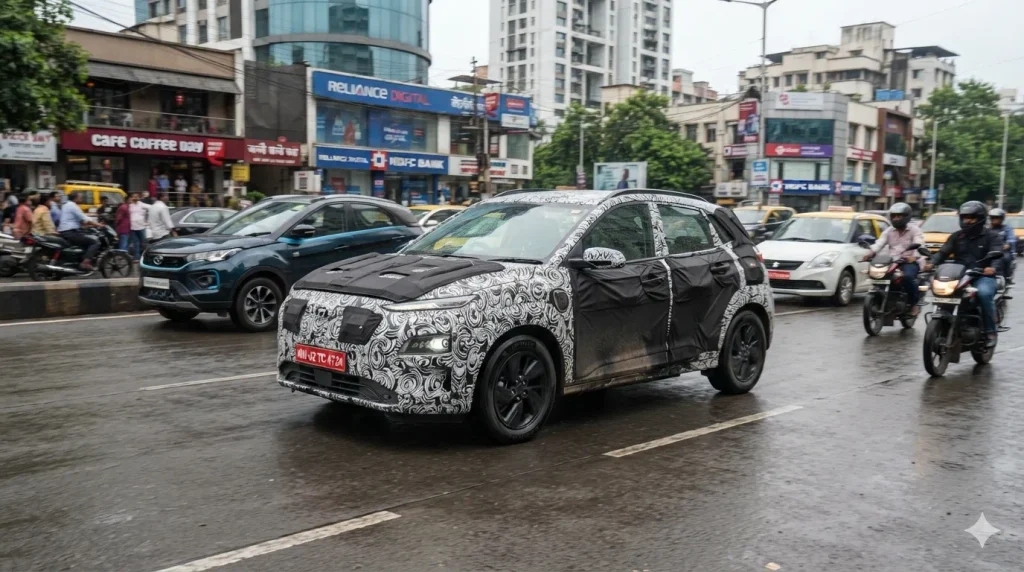
Hyundai is preparing a new compact electric SUV for India, and the model could arrive before the end of 2026. The upcoming EV is being developed with the Indian market in mind and is expected to compete in one of the country’s fastest-growing electric-car segments.
Known internally as HE1i, the upcoming Hyundai EV will be designed and manufactured in India. Hyundai has also confirmed that the model will use its E-GMP (K) dedicated electric-vehicle platform, with standard-range and long-range versions planned.
For buyers considering an electric car in the ₹10 lakh–₹15 lakh space, the new Hyundai could become an important model to watch. However, Hyundai has not yet revealed the production name, final price, battery specifications or certified range.
Hyundai Compact EV: What We Know So Far
Hyundai has confirmed several details about its upcoming compact EV, while other specifications remain unconfirmed.
| Detail | Hyundai Compact EV |
|---|---|
| Internal development code | HE1i |
| Body style | Compact electric SUV |
| Platform | E-GMP (K) |
| India production | Confirmed |
| Manufacturing | Sriperumbudur, Tamil Nadu |
| Battery versions | Standard-range and long-range |
| Infotainment | Next-generation system |
| ADAS | Level 2 technology |
| Launch | Expected around late 2026; exact date not confirmed |
| Production name | Not announced |
The vehicle will be manufactured at Hyundai Motor India’s Sriperumbudur facility in Tamil Nadu.
Hyundai has also confirmed a next-generation infotainment system and Level 2 assisted-driving technology for the upcoming model.
When Will Hyundai Launch Its New Compact EV?
The launch timeline needs some context.
Hyundai Motor Company’s 2026 Investor Day materials indicated that the India-focused compact EV would debut by March 2027.
More recently, Hyundai Motor India CEO Tarun Garg indicated that the company could bring the model to market by the end of 2026.
As a result, the most accurate way to describe the timeline currently is that Hyundai is targeting a launch around late 2026, while an earlier company timeline extended into March 2027.
Hyundai has not announced a specific launch date.
That distinction is important because several online reports may describe the vehicle as definitely launching in 2026, even though the exact date has not been officially confirmed.
What Platform Will the Hyundai Compact EV Use?
The upcoming SUV will use Hyundai’s E-GMP (K) architecture.
A dedicated EV platform is designed specifically around an electric powertrain rather than adapting an existing petrol or diesel vehicle platform.
The E-GMP (K) architecture is also associated with Hyundai’s smaller international electric models, including the Inster.
However, the Indian compact EV should not simply be assumed to be an Indian version of the Inster. Hyundai is developing the new model specifically for India, with local manufacturing and market requirements in mind.
The platform could help Hyundai optimize the vehicle’s cabin packaging, battery placement and electric powertrain integration.
Two Battery Versions Are Expected
Hyundai has confirmed that the upcoming compact EV will be offered in standard-range and long-range versions.
The company has not yet revealed the final battery capacities or certified range figures for the Indian model.
That means specifications quoted online should be treated carefully until Hyundai releases the official numbers.
The international Hyundai Inster is available with different battery configurations, but those figures should not automatically be applied to the Indian HE1i.
The Indian model may receive different battery specifications depending on Hyundai’s localization and pricing strategy.
How Much Range Could It Offer?
This is one of the biggest unanswered questions.
Hyundai has not yet officially announced the Indian model’s certified range.
For buyers, the long-range version will be particularly important because range is one of the main factors influencing EV purchasing decisions.
The final range will depend on:
- Battery capacity
- Motor efficiency
- Vehicle weight
- Wheel and tyre configuration
- Software calibration
- Hyundai’s final testing and certification
Until the official certification figures are released, it is better not to treat unofficial range estimates as confirmed specifications.
What Technology Will It Get?
Hyundai has already confirmed that the new compact EV will receive several technology upgrades.
Next-generation infotainment
The vehicle will feature Hyundai’s next-generation infotainment system.
The exact screen size, operating system, connected features and variant-wise equipment have not yet been fully disclosed.
Level 2 assisted driving
Hyundai has also confirmed Level 2 assisted-driving technology.
The exact ADAS functions available on each variant have not yet been announced.
Depending on the final equipment list, this could include systems such as adaptive cruise control, lane-keeping assistance and other driver-assistance functions, but these should not be treated as confirmed for the Indian model until Hyundai publishes the final specifications.
Who Will the Hyundai Compact EV Compete With?
The new Hyundai will enter a competitive part of India’s electric-car market.
Potential rivals include:
- Tata Nexon EV
- Mahindra XUV 3XO EV
- Kia Syros EV
- Other upcoming compact electric SUVs
The exact competitive set will depend on Hyundai’s final dimensions, pricing and launch timing.
Price will be particularly important.
A compact Hyundai EV positioned around the ₹10 lakh–₹15 lakh range could bring the company into direct competition with some of India’s most accessible electric SUVs.
What Could the Hyundai Compact EV Cost?
Hyundai has not officially announced the price.
Some automotive reports and estimates have placed the upcoming EV somewhere around the ₹10 lakh–₹14 lakh range, but these figures should be treated as estimates rather than official pricing.
The final price will depend on several factors:
- Battery capacity
- Localisation
- Variant structure
- Equipment
- Manufacturing costs
- Hyundai’s market positioning
The starting price will be particularly important because Hyundai will need to balance battery size, features and affordability in a highly competitive segment.
Hyundai Is Increasing EV Localization in India
The upcoming compact EV is also important from a localization perspective.
Hyundai plans to manufacture the vehicle in India, while its broader India EV strategy includes increasing local sourcing.
Reports have indicated that the initial battery-cell supply for the upcoming compact EV could involve Svolt, while Hyundai continues to work toward greater battery localization through its association with Exide.
For the Indian EV market, increasing local production and component sourcing can potentially help manufacturers control costs and develop products specifically suited to local requirements.
Why This EV Matters for Hyundai
Hyundai already sells electric vehicles such as the CRETA Electric and IONIQ 5 in India.
However, a smaller and more affordable EV would allow Hyundai to target a much larger section of the passenger-car market.
That is important because India’s EV market is gradually moving beyond premium vehicles.
A compact Hyundai EV could give the company a product positioned closer to mainstream buyers who want an electric SUV without moving into the higher price brackets occupied by larger EVs.
What Indian EV Buyers Should Watch
If you are considering an EV in the next year, there are several details worth watching before making a decision on the Hyundai compact EV.
1. Final price
The starting price will determine how directly Hyundai can compete with Tata and Mahindra.
2. Battery capacity
A larger battery could provide greater range but may also increase the vehicle’s price.
3. Certified range
The official test-cycle range will provide the first reliable benchmark for the vehicle.
4. Charging speed
DC fast-charging performance could become an important factor for buyers who regularly travel on highways.
5. Variant structure
Hyundai’s decision on which features and battery options are available in each variant will affect the value proposition.
6. ADAS availability
The company has confirmed Level 2 technology, but buyers will need to see which features are available on which variants.
7. Launch timing
The exact launch date remains unconfirmed.
What Could Make This EV Interesting?
The Hyundai compact EV has several elements that could make it an important addition to India’s EV market.
It is being developed specifically with India in mind, will be locally manufactured and will use a dedicated EV platform.
The availability of standard-range and long-range versions could also allow Hyundai to target different buyer requirements.
At the same time, the vehicle will face strong competition.
Tata already has experience in India’s mass-market EV segment, while Mahindra is expanding its electric SUV portfolio. Hyundai will therefore need to get the combination of price, range, charging and features right.
What We Still Don’t Know
Despite the information already available, several major details remain unknown.
Hyundai has not yet officially revealed:
- Production name
- Exact launch date
- Battery capacities
- Official range
- Motor output
- Torque
- Charging time
- Detailed dimensions
- Boot space
- Variant-wise features
- Warranty details
- Final price
These specifications will determine where the new Hyundai sits in India’s electric-car market.
Hyundai Compact EV vs Current EV Buyers’ Options
For buyers considering an EV today, waiting for the Hyundai compact EV means comparing a future product against models that are already available.
That’s an important distinction.
Existing EVs can be evaluated through actual pricing, charging networks, owner experiences and available variants.
The Hyundai compact EV, meanwhile, still has several specifications waiting to be confirmed.
For buyers who are not in a hurry, the arrival of another major manufacturer in the compact EV segment could provide more choice.
For buyers who need a car immediately, currently available models can be evaluated based on their actual specifications and local availability.
READ MORE → EV Motor vs Petrol Engine: How They Work and What Changes
The Bottom Line
Hyundai’s upcoming compact EV could become one of the company’s most important electric models for the Indian mass market.
The company has confirmed a dedicated EV platform, local production, standard-range and long-range versions, next-generation infotainment and Level 2 assisted-driving technology.
The launch is currently expected around late 2026, although Hyundai’s earlier timeline extended into March 2027.
The biggest unanswered questions remain the battery size, certified range, charging performance, final design, production name and price.
Until Hyundai officially reveals those details, buyers should treat unofficial specifications and pricing estimates as provisional.
What is already clear is that Hyundai is preparing to compete more directly in India’s mainstream electric-car market — and the compact EV segment could become considerably more competitive once this model arrives.
FAQ
When will Hyundai launch its new compact EV in India?
Hyundai has indicated that the compact EV could arrive by the end of 2026, while an earlier company timeline extended to March 2027. Hyundai has not yet announced an exact launch date.
What is the Hyundai compact EV called?
The vehicle is currently known internally as HE1i. Hyundai has not yet revealed its final production name.
What battery options will the Hyundai compact EV get?
Hyundai has confirmed standard-range and long-range versions, but the final Indian battery capacities have not yet been announced.
What will the Hyundai compact EV cost?
Hyundai has not announced official pricing. Current industry estimates have placed it around the ₹10 lakh–₹14 lakh range, but this should not be treated as confirmed pricing.
Which EVs could compete with the Hyundai compact EV?
The vehicle is expected to compete in the compact electric SUV segment against models such as the Tata Nexon EV and Mahindra XUV 3XO EV, along with other upcoming compact EVs.
Will the Hyundai compact EV be made in India?
Yes. Hyundai has confirmed that the vehicle will be manufactured in India at its Sriperumbudur facility in Tamil Nadu.
More EV news
News story
India Bought 30,696 Electric Cars in August: Which EV Brands Are Winning in 2026?
October 1, 2026
News story
Tata EV BaaS Prices Explained: Up to ₹7.3 Lakh Less Upfront, but What Do Buyers Pay Later?
October 1, 2026
News story
Mahindra Charge_iN Reaches 50 Stations; First HPCL Site Opens on Mumbai–Pune Expressway
September 29, 2026